
Car Rental in Bali for Families: When a Car Makes More Sense Than a Bike
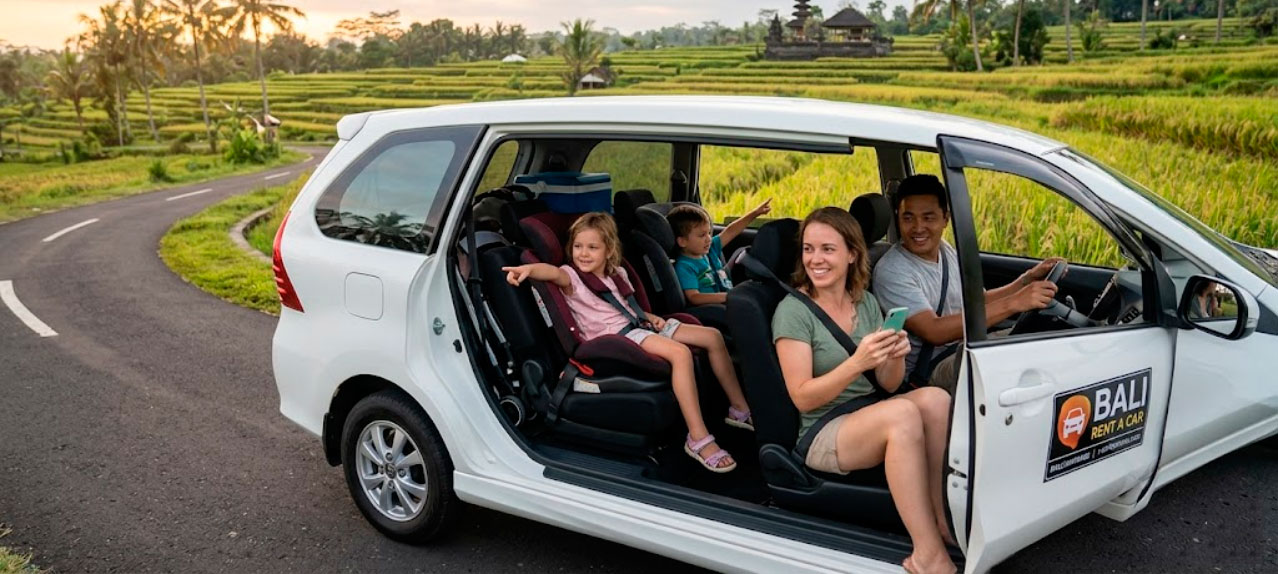
In Bali, a bike often feels like the most obvious option: it is cheaper, easier to maneuver, and strongly associated with the island. But when the trip includes children, several adults, suitcases, a stroller, or a full-day itinerary, the logic changes. In these situations, renting a car stops being a luxury and becomes a calmer, safer, and often more cost-effective choice.
The main argument in favor of a car for a family is comfort on the road. On a bike, any transfer quickly turns into a logistics exercise: who will carry the child, where to put backpacks, how to transport shopping, and what to do about rain or heat. In a car, these questions disappear immediately. Air conditioning, a proper trunk, a closed cabin, and the ability to travel without overloading the vehicle matter especially on longer routes between areas, beach days, restaurant trips, waterfall visits, or full-day outings around the island.
The second point is safety. Even an experienced rider would struggle to call a bike the best transport option for a family with children. Bali’s roads are busy, traffic flows on the left, and local driving includes many sudden maneuvers and unpredictable situations. For a couple without children, that is one thing; for a family with a small child, it is completely different. A car provides seat belts, more protection in bad weather, and less fatigue by the end of the day. For travelers who want to relax rather than simply manage, that difference matters.
If you look only at the basic rental rate, a bike seems cheaper. But on a real trip, you need to consider the full picture. Two bikes instead of one car, separate spending on rain gear, baggage limits, the inability to ride comfortably at night or in the rain, and taxi expenses on days when a bike is inconvenient all gradually erase the price gap. For a family of three to five people, a car is often the more rational option in terms of total holiday cost, especially if active travel around the island is part of the plan.
It is also worth looking at the travel format itself. If you stay in one area, rarely go far, and do not carry many things with you, local trips and delivery services may be enough. But if your plans include Nusa Dua, Ubud, Seminyak, Canggu, Bukit beaches, and evening restaurants on different days, a car removes a huge amount of everyday stress. You are no longer dependent on the weather, you do not have to think about how to get back tired after a long day, and you can build the route around your own priorities rather than the limits of a bike.
The class of car should also match the size of your family and the type of route. A compact city car works well for a couple with one child and a moderate amount of luggage. If there are more people, a stroller, or longer drives ahead, an SUV or a more spacious vehicle is usually the smarter choice. A premium car can make sense not only for status, but also for a quieter cabin, smoother ride, and better overall comfort if driving takes up a large part of the holiday.
Another important question is whether to choose self-drive or a car with a driver. If you are confident behind the wheel, comfortable with left-hand traffic, and want maximum freedom, self-drive gives you flexibility. But if the trip is family-focused and the priority is a restful holiday without navigation stress or parking issues, a personal driver is often the most convenient solution. This becomes especially noticeable on busy sightseeing days, in unfamiliar areas, and during peak season.
The practical conclusion is simple: the more people, luggage, and transfers involved, the more valuable a car becomes. For a family holiday in Bali, a car is not about paying more; it is about predictability, comfort, and a calmer rhythm for the whole trip. If the goal is to enjoy the vacation rather than adapt the itinerary to a bike, a rental car usually wins in overall value.

Would you like to comment?